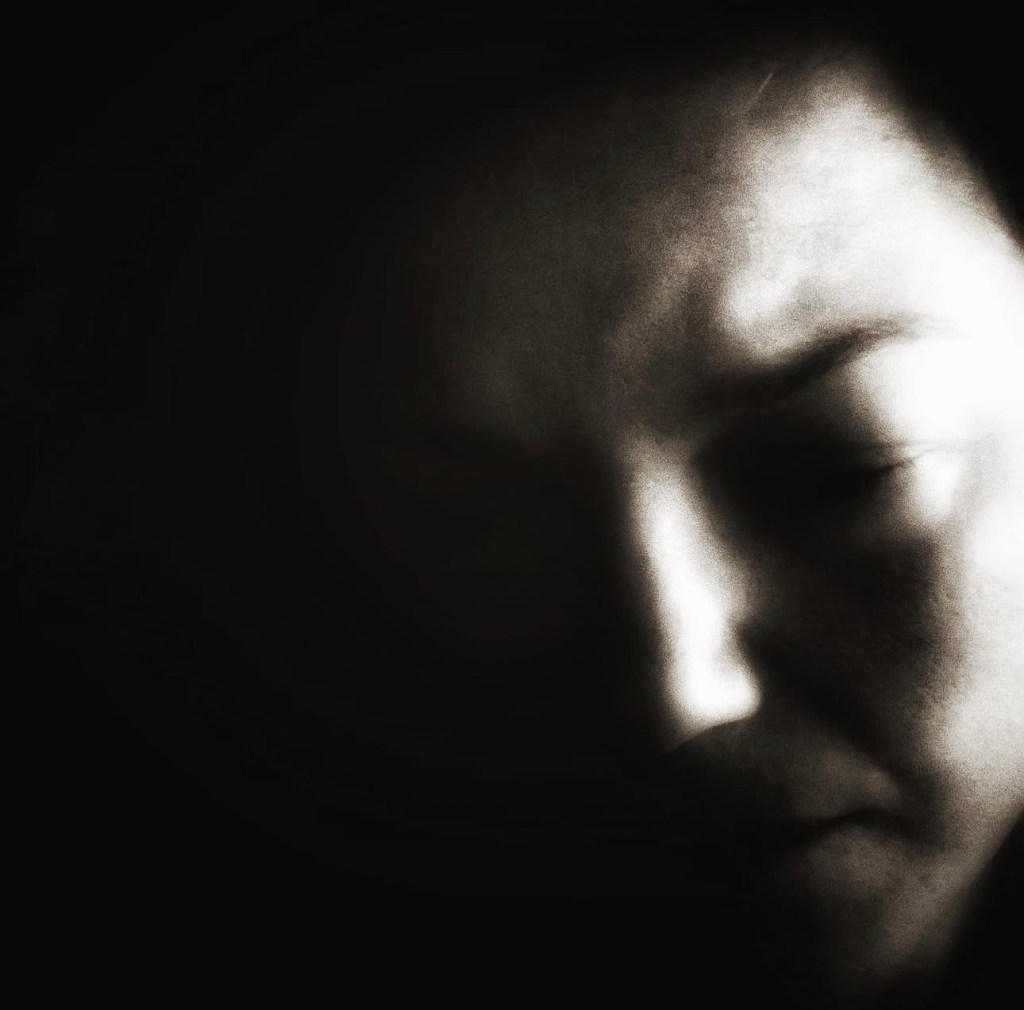
I was looking at Tallulah, my oldest and very cherished cat, this morning. She’s 17 now, and there’s pain in her legs. And I started thinking about the cruelty of ageing. That simply getting older comes with this physical diminishment, that our bodies begin to hurt, that pain becomes part of the experience of being alive.
And it struck me because I’d just woken up feeling exhausted. Again. All I want is to be horizontal. It’s been several days of this, but in truth I’ve been carrying some version of this fatigue for a very long time.
Last night I didn’t go out for my husband Nick’s birthday. I missed seeing people I hadn’t seen in ages, spending time with my daughter and watching my friend play music. All things that would have been nourishing, things I genuinely wanted to do. But I simply didn’t have the energy.
And there’s deep sadness in that. A feeling that my life is being diminished, not because I don’t want to participate in it, but because my body won’t always let me.
I’ve spent a lot of time trying to understand this fatigue. I can explain it in all sorts of ways. I can talk about nervous systems, the energy I’ve expended over the years, the cost of pushing through. I can find philosophical ways of looking at it.
But sometimes it feels like there’s damage, like something isn’t working as it should, like I’m not functioning at the capacity I know I could. And I don’t always feel hopeful about resolving that.
What struck me this morning, though, was the loneliness of it.
The things we cannot communicate
Suffering is such an extraordinarily personal experience.
Whether it’s physical pain, mental or emotional suffering, exhaustion, hormonal disruption, or the pain of ageing, it’s something we feel from the inside. And however much we try to describe it, nobody else can actually experience what we’re experiencing.
We can explain that we’re struggling, that we’re exhausted, that something hurts or that we’re overwhelmed. Other people may relate, and they may genuinely want to understand, but there’s still this distance between what we’re feeling and what we can communicate.
And sometimes the suffering itself takes away our ability to explain it.
We talk about not having enough spoons, or eggs, or energy. But what happens when we don’t even have the capacity to find the words? When the effort of explaining why we can’t do something is itself more than we can manage?
When we aren’t at our best, we’re often expected to keep pushing through. And when we can’t push through, we’re expected to explain ourselves. The very thing that’s making life difficult also makes it harder to ask for understanding.
I think about people living with ME, PMDD, chronic pain, and so many other experiences that are difficult to see from the outside. The struggle isn’t only what they’re living with. It’s also having to communicate it, justify it, sometimes even prove that it’s real.
And this is something that feels particularly familiar to women, although certainly not exclusive to us.
For so long, pain that has been familiar to women has also been normalised, minimised or simply silenced. Spain introducing paid medical leave for debilitating menstrual pain in 2023 is an important recognition of something that people have been living with, and expected to work through, for generations.
It’s extraordinary, really, how much suffering we’ve come to regard as simply part of life, and how often that familiarity becomes a backbone to not take it seriously or simply ignore it.
The need to be understood
I think a large part of what makes suffering more bearable is feeling understood. Not having someone fix it, or even fully comprehend what we’re going through, because perhaps that’s impossible, but having someone believe us, having our experience recognised rather than denied.
And it keeps taking me back to the importance of validation, something that sits at the heart of so much of my work.
Because there’s a difference between suffering and the alienation that can come from having our suffering diminished, dismissed or even ignored.
We may not be able to change what we’re experiencing, and we may have to accept that some things are beyond our control. But acceptance doesn’t mean we’re happy about it, or that we have to find something positive in every difficulty, turn our pain into a lesson or pretend we’re grateful for what it’s taught us.
Sometimes things are simply difficult. Sometimes they’re sad. Sometimes they’re cruel.
Acceptance, to me, is about not adding another layer of suffering by fighting against the reality of what we’re experiencing. Not torturing ourselves for being where we are.
And validation is part of that, being able to acknowledge what is happening without judgement or denial, so that we don’t become swallowed up in that sense of alienation.
The long search for an explanation
There seems to be an increasing amount of discourse questioning the validity or usefulness of diagnosis. And I understand that diagnostic systems are imperfect. Of course they are. But I worry about what happens when we dismiss their importance to people who have spent years, sometimes decades, trying to understand their own experience.
I can trace my own struggles with fatigue back to my early thirties, at the very least.
I remember suspecting that hypothyroidism might explain some of what I was experiencing. It took years to get diagnosed. And I was right.
Then there was PCOS. Again, years of trying to understand what was happening, years before it was recognised. I’m not even entirely sure how formally established that diagnosis is, although nobody seems to question it now.
Then ADHD.
Then autism.
And now perimenopause, and all the hormonal changes that come with it.
And sleep. I should add the years of difficulties with sleep to that list, too.
And the weight gain. The excessive weight gain that itself creates physical fatigue, and all the shame that can come with it.
And I haven’t even mentioned the joint pain, the arthritis, the sciatica, the plantar fasciitis. The different physiotherapists I’ve seen over the years, each trying to help with a particular difficulty.
I keep remembering things to add to this list as I write.
And that’s the point. None of these things exists in isolation. They’re not separate experiences that I take turns having. They’re all part of the same body, the same nervous system, the same human being. I don’t reserve my aching back for Mondays while Tuesdays are dedicated to feeling my hormonal imbalance.
And yet we seem to spend so much of our time trying to understand them separately.
Where do we go to be understood as a whole person?
We’re constantly being told about solutions.
This is how you fix your PCOS. This is how you fix your hypothyroidism. This is how you fix your perimenopause.
Take the HRT. Take the thyroxine. Change your diet. Do this, don’t do that.
And then you come across someone who says they’ve finally found the thing that works for them.
Which is wonderful. I don’t want to diminish that for a moment.
But I sometimes wonder how much of this is serendipity. There’s something almost lucky about happening upon the one thing that finally unlocks something for you, when other people can expend an enormous amount of time and energy, as I have over the years, trying to find answers and still not get to that point. Sometimes not even getting to the point of being heard.
And what if there isn’t one thing? What if the difficulty lies precisely in the interaction between so many things?
I think this is where my own sense of hopelessness sometimes comes from. Not because I believe nothing can help, but because I genuinely don’t know where to go to find someone who can help me understand the whole picture.
Where do I find the person, or the people, who can look at all of this together? Someone who can understand the hormonal, neurological, physical and emotional complexity of my experience, rather than treating each part as though it belongs to someone different?
And my experience is only one blueprint of one human being.
In my coaching work, I come across people all the time who are living with multiple, overlapping conditions and profiles. ADHD, autism, FND, POTS, Ehlers-Danlos syndrome, ME, MS, chronic fatigue syndrome.
And I wonder how much we’re still missing. How many of these diagnoses are giving us useful pieces of a much bigger picture that we haven’t yet learned to see?
I’m constantly struck by how extraordinarily complex we are as organisms. And yet our approach to understanding human suffering is so fragmented.
We have specialists who are incredibly difficult to access, and when we finally reach them, they may only be able to look at one particular part of us.
Of course specialisation has brought extraordinary advances in medicine. But where is the person who puts it all together? Where is the understanding of the human experience as a whole, and particularly the experience of being incapacitated, of not being able to function in the ways we want to, despite all our efforts?
I do wonder whether AI might eventually help with this. Not by replacing doctors or human relationships, but by making it possible to bring together the different pieces of someone’s history and experience in a way that is currently so difficult. By handling the complexity that as humans we struggle to hold in one piece.
There’s something hopeful in the possibility of being understood as a whole, rather than as a series of unrelated problems.
But for now, I think there’s a real failure of understanding here.
And that makes me sad.
The loneliness of not knowing
I don’t have a solution to offer, and perhaps that’s important, because I think so much of the conversation around suffering is about trying to resolve it.
We want to find the cause, find the treatment, find the thing that will make everything better.
And I want those things too. Very much.
I want to wake up with energy. I want to participate fully in my life. I want to go out with the people I love, to do the things that nourish me, without having to calculate whether I can afford the energy.
I want Tallulah not to have pain in her legs.
But I also think we need to make room for the possibility that sometimes we don’t have the answers. That some suffering cannot immediately be resolved, and some may never be. And that doesn’t mean we have to be happy about it, or that the sadness, frustration or grief that comes with it is something we should have to overcome.
I think there’s something very human about wanting our suffering to be witnessed, to have someone understand that what we’re experiencing is difficult, even when they can’t fully share it.
Suffering may be an unavoidable part of being alive. It’s also something so universal that we will all experience it in one way or another, be it physical, emotional or mental. It’s an intrinsic part of being human, probably as much as experiencing joy. We will all experience suffering.
And perhaps that’s why it matters so much that we recognise it in one another, without questioning it, minimising it or immediately trying to turn it into something else.
Because while suffering may be unavoidable, the alienation that comes from not being understood doesn’t have to be.

Leave a Reply