We have this strange idea that if a conversation really matters, we should have it face to face.
It is somehow considered more grown-up, more honest, more courageous and certainly more respectful. You don’t break up with someone by text. You don’t raise serious problems with your manager over email. If something difficult needs saying, apparently the proper thing to do is sit opposite another human being, look them squarely in the eye and say it.
I’m increasingly convinced this is truly a terrible, terrible idea.
Not because I think we should all retreat behind our phones and never speak to another human being again, but because a difficult live conversation is actually an extraordinarily demanding thing to do well, and we seem to have collectively decided that everyone should be able to do it without acknowledging just how much skill it requires.
Think about what is happening when you are sitting opposite somebody during a conversation that matters. You are listening to their words, but you are also reading their face, hearing their tone, noticing their body language, watching for changes in expression, managing your own face and tone, remembering what you wanted to say, processing the thing they have just said that you absolutely were not expecting, trying to work out whether you have misunderstood them, trying not to lose the point you were making and, somewhere in the middle, hopefully retaining enough access to your reasoning brain to come up with something vaguely sensible in response.
This is already a lot for a human brain. For many neurodivergent brains, it can be considerably more.
I believe that in neurodivergence, we often have a much wider aperture on the world. We receive a lot of information. Sensory filtering, attention and the way we process incoming information can all work differently, so the lights, sounds, movements, facial expressions, tone changes and emotional shifts in the room may all be arriving with rather less of a velvet rope around them. We are not tap-dancing frogs on the moon, doing something completely unrelated to ordinary human experience; we are often the canaries in the mine, experiencing more intensely something that is already difficult for most people.
And then we add conflict.
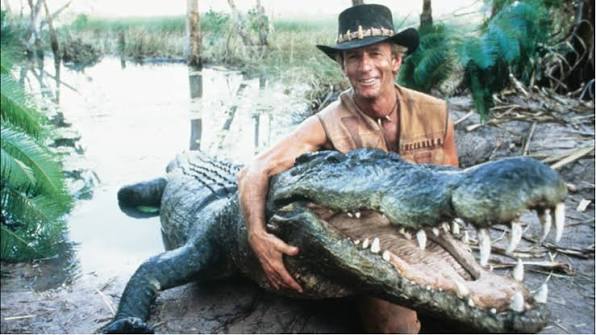
The nervous system hears trouble and does exactly what it is supposed to do. It prepares us for danger. The reasoning brain becomes less available and the older, faster alarm systems get much louder. As I often describe it, the crocodile starts talking.
Unfortunately, this is usually the precise moment when we expect ourselves to become excellent negotiators. We are supposed to remain calm, articulate, emotionally intelligent, able to listen generously while also standing our ground, capable of responding instantly to whatever is thrown at us, and somehow able to remember every relevant fact without becoming defensive, angry, tearful, overwhelmed or confused.
We are not negotiators. We are not politicians. We are not actors performing beautifully scripted conflict in which someone says something devastating and we immediately produce the perfect sentence that resolves the entire plot. We are people with nervous systems, and when two people are triggered at the same time, what often happens is not human-to-human communication at all. It is crocodile-to-crocodile.
One person says something from defence, the other person hears threat and responds from defence, which creates more threat, which creates more defence, and before long everybody is arguing about something that may bear surprisingly little resemblance to the issue they were originally trying to resolve.
There is another problem with live conversation which I see repeatedly in coaching, particularly at work, and that is accountability. A conversation happens in a room and then, essentially, it disappears.
Later, one person remembers that something was agreed and the other remembers it differently. Someone says a particular comment was made and someone else says it wasn’t. One person remembers the tone as aggressive, the other remembers themselves as assertive. Someone thought they had been promised an adjustment, a change, a piece of work, a next step, and six months later everyone is digging around trying to establish what anybody actually said. There is no arbiter, and the more emotionally charged the conversation was, the less confident any of us should probably be that our memory of every word is immaculate.
This is one of the reasons I increasingly encourage people to use writing, messaging and voice notes for the difficult bit. Not for everything. I am not proposing that marriages should be conducted entirely through WhatsApp or that nobody should ever speak to their manager again. What I am suggesting is that we stop demanding that one live conversation perform every function at once.
If there is something big that needs saying, writing it down, dictating it or recording a voice note gives us a little more control over the process. We can get the first version out somewhere private, where we are allowed to be angry and irrational and swear as much as we like, and then come back to it and work out what we actually want to communicate. We might realise that some of what came out was mainly the crocodile, remember something important that got lost in the first rush, or simply notice that the thing we thought we absolutely had to say fifteen minutes ago is not really the thing we think now.
That distance matters because it gives us access to the art of the pause, and crucially, it gives the other person exactly the same opportunity. This is not simply an accommodation for the neurodivergent person who finds live conflict difficult. The person receiving the message gets to have their reaction without having to turn it immediately into a response. Their crocodile can stomp around for a bit too. They can feel offended, misunderstood, defensive, furious or whatever else comes up, without those first few seconds automatically becoming part of the conversation.
They can also go back and read or listen again, which is surprisingly important. In live conversation we often respond to what we think we heard, especially once we are activated, whereas a message allows us to check. Was that actually what they said? Is that actually what they meant? Is there another way of understanding this now that my nervous system is not shouting quite so loudly?
And then, once some of that bigger material has been expressed and had time to land, we can absolutely speak to each other. In fact, I think that conversation often has a much better chance of being useful because it is no longer being asked to carry everything. We do not have to reveal the problem, process it, regulate ourselves, respond to the other person and somehow reach a resolution all in the same sitting. We can meet knowing that the difficult thing has already been said, that we have both had some time with it, and that there is a shared record of what has actually been communicated.
That feels much closer to the sort of conversation I actually want to have. Not two crocodiles trying to establish who is right while both of their alarm systems are going off, but two people who have hopefully had enough space to come back into themselves and are now a little more able to meet each other as humans.
This is why I increasingly question the idea that face-to-face communication is inherently the more respectful option. If a particular format makes it harder for somebody to think, increases the chance that both people will become defensive, gives neither person much time to process what they are hearing and then leaves everybody afterwards with a slightly different memory of what actually happened, I am not sure there is anything particularly respectful about insisting on it simply because that is how we think difficult conversations are supposed to happen.
Maybe the respectful thing is to be a little less precious about the medium and a little more interested in what actually helps people communicate. Sometimes that will be face to face. Sometimes it will be a message, an email or a voice note first, followed by a conversation once the difficult material has had a chance to settle.
For tough conversations, I would much rather give the humans a chance to turn up before asking the crocodiles to negotiate.

Leave a Reply