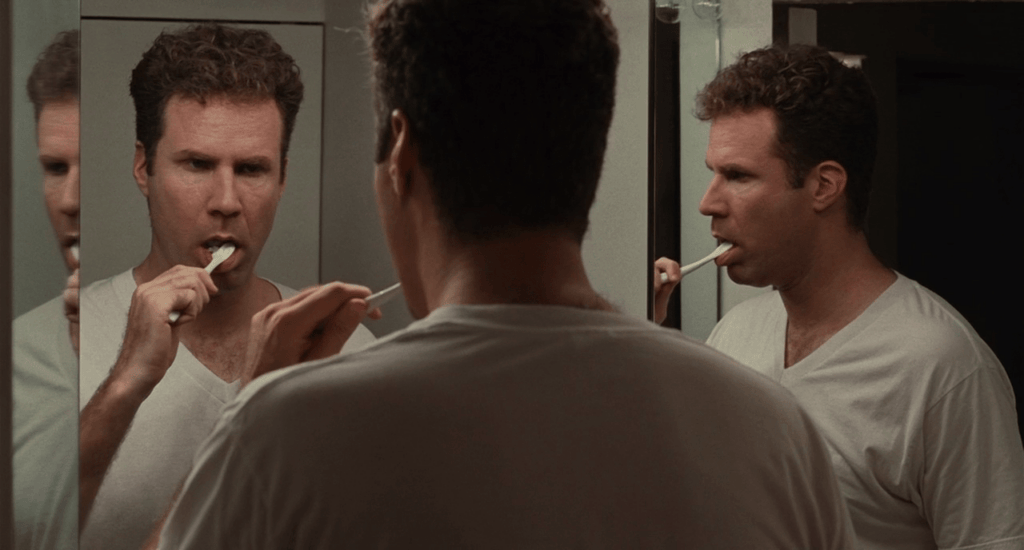
From brushing your teeth to stockpiling: sweeping the ADHD mindfield
I woke up this morning to a message from a friend who’s writing an article about the government’s plans to encourage us to stockpile emergency supplies. She was curious about what this might mean for people with ADHD, especially in the context of how we’re increasingly asked, as consumers, to do the right thing. Recycling batteries, collecting blister packs, sorting out crisp packets, remembering to take unwanted clothes to charity, keeping things that might be useful one day. All these little jobs that we’re expected to organise, remember and somehow get right.
Let me register here my massive fucking bugbear, a bugbear with a giant chip on its bugbear shoulder, that companies put an enormous amount of responsibility on us to do the right thing. But are they doing the right thing themselves? And isn’t it terribly convenient that we’re expected to do all this work so they don’t have to?
This is one of those hills I often feel prepared to die on, and I’ve clearly spent a considerable amount of time thinking about it. Which is why I’m so thankful for Denise Hicks*, an innovation strategist working in sustainability and responsible business, for exploring these questions through her work.
Which made me realise that I’d very readily dismissed the whole question of stockpiling, almost instantly, despite seeing it pile up in the press.
And if I take a second to examine why, or perhaps three seconds, ten, fifteen, two hours, I can see several things happening.
The first flashcard my brain throws up says ‘Scaremongering. We’ve been here before.’ The next one says ‘This requires extra thinking that I simply don’t have available right now. I’ve got so many other things to think about without adding stockpiling to the list.’
And then, of course, another thought comes along. ‘But what if that’s a big mistake? Should I actually be thinking about stockpiling?’
And there we have it. One new idea, three immediate responses, and already a whole collection of questions opening up. It’s like sending a bowling ball down an alley, except instead of nine pins, there are 360.
And that’s before we’ve even bought a tin of baked beans.
We don’t lack attention. We have too much attention.
One of my tenets about ADHD is that we don’t lack attention, we have too much of it. What we struggle with is filtering. We cast a much wider net, absorbing enormous amounts of information, noticing things, recognising patterns, making connections and trying to solve problems. Our brains are constantly taking in more of the world, and the difficulty isn’t necessarily paying attention, but deciding what not to pay attention to.
I think of the brain as an archivist, constantly cataloguing what we encounter, recognising patterns, cross-referencing information and opening old files whenever something new reminds us of something we’ve encountered before.
This isn’t something I’ve entirely made up. Neuroscientist @David Eagleman talks about the brain’s extraordinary capacity for pattern recognition, how it uses previous experience to make sense of what we’re seeing and encountering. I often describe this as the brain throwing up flashcards, rapidly comparing what we’re experiencing with what it already knows.
Our thinking isn’t simply deep, it’s wide. We don’t necessarily follow a linear path from one piece of information to another, following a crumb until we eventually find the loaf. We see the crumb and the loaf at the same time.
We’re not narrow-minded, we’re wide-minded.
And that can be an extraordinary strength, but it can also be bloody exhausting, especially when you consider just how many decisions we’re being asked to make, often without even realising we’re making them.
How many decisions does it take to brush your teeth?
Let’s take the first five minutes of an ordinary morning.
You’re brushing your teeth. Do you leave the tap running? Obviously not, that’s wasting water. But how much water should you use to rinse your mouth, and at what point is it reasonable to turn the tap back on?
Perhaps you should have a glass beside the sink, so you can fill it with exactly the amount you need. But then you’ve got to think about the glass. Does it stay there? How often does it need washing? Should you bring it downstairs to put it in the dishwasher? In my house, that means travelling down three floors with a glass, then remembering to bring it back upstairs again.
Or you could wash it in the bathroom sink, but then you’re using more water, which rather defeats the original purpose.
For full disclosure, there often isn’t a glass, and sometimes I use the top of the toothpaste bottle to rinse my mouth. Not necessarily the most hygienic arrangement, but imperfect solutions for imperfect situations.
Speaking of toothpaste, I’ve used toothpaste pumps for years, but it’s only now that I’ve given myself the time to think about why I use a pump rather than a tube.
There’s a surprising amount of executive function involved in using a toothpaste tube. For a start, they don’t stand up, which is where we keep our toothpaste. Where do you put the tube? In another glass? How many glasses can we possibly have beside the sink?
Then you’ve got to open the lid, which requires two hands, squeeze the toothpaste onto the brush, close the lid again and put it away.
And how much toothpaste is the right amount? We’re told that a pea-sized amount is enough, but the adverts show a beautiful long stripe covering the entire toothbrush. It looks much prettier, but also rather wasteful.
A pump eliminates several of these steps. It’s much more efficient for me, which is why I’ve been using one for years.
Except I also feel a tremendous amount of guilt about it.
How recyclable are toothpaste pumps compared with tubes? I’ve actually researched this before, but I can’t remember the answer because that’s yet more information to retain. What I do know is that I’ve chosen the pump because it works for me, and that I’m not recycling it.
And there’s another recycling problem.
Our main recycling bin is in the kitchen, on the lowest floor of the house. But what happens to all the recyclable things on the other floors? Ideally, we’d collect all the paper, packaging and everything else and bring it downstairs to be recycled.
Does that actually happen?
Should I leave you in suspense?
I will, because I can tell you that the guilt is devouring me.
Then there’s the toothbrush itself. How often should you replace it? How do you remember? And what do you do with the old ones?
For many people I coach, brushing their teeth can be difficult in itself. Sometimes it’s the strong mint taste, particularly just before bed. In the morning, the mint interferes with the taste of tea or coffee, so they might put off brushing until afterwards, and then feel guilty about not doing it first.
Some people find it works better to keep their toothbrush in the downstairs toilet, near the kitchen, or even in the kitchen itself, so they can brush after their morning drink.
Look at what’s happened just from examining the simple act of brushing our teeth. What might appear to be fleeting thoughts involves a whole architecture of thinking, consciously and unconsciously, with questions, associations, memories, calculations and attempts to find the most efficient solution.
And that’s just brushing our teeth. We haven’t even talked about washing our face, taking medication, brushing our hair, putting deodorant on, having a fucking shower.
Can you feel the exhaustion of decision-making in action?
We can’t possibly spend our lives examining every tiny decision, but that doesn’t stop the questions from coming.
The cost of three seconds
What exactly is the length of a thought? I have no idea.
Sometimes thoughts seem to appear like flashcards, little flashes of information that trigger another thought, another association, another file opening. It’s like having a pack of cards constantly being shuffled in our brain, except the pack doesn’t have 52 cards, it has 5,000.
And no wonder we might end up in freeze mode when we’re constantly sorting through them, trying to decide what deserves our attention and what can be left for later.
Let’s be conservative here and take just twenty tiny questions that might arise from getting ourselves out of bed in the morning. Some will take considerably longer to think about, some much less, but let’s give them an average of three seconds each.
Twenty questions, three seconds each. That’s one minute a day, seven minutes a week, around half an hour a month, and just over six hours a year.
Six hours spent on twenty tiny questions, arising from just a few minutes of our morning routine.
And that’s before we’ve accounted for all the other micro-decisions we make throughout the day, the questions that trigger further questions, and the ones that have been coming back to visit us for years.
Which brings me to cat food sachets.
The bloody cat food sachets
I have nine cats, and I have spent an extraordinary amount of time thinking about cat food packaging.
Most cat food seems to come in individual sachets these days. They’re convenient in theory, although the way they rip means you inevitably end up with cat food juice on your fingers, which is disgusting.
And then there’s the recycling.
The sachets are supposedly recyclable, but not in normal household recycling. You have to rinse them individually, which involves using more water, collect them and take them somewhere that accepts them.
I tried doing this. I even had a box specifically for collecting the empty sachets, but the amount of additional work involved was insane.
Every day, you’ve got to rinse the sachets, find somewhere to put them, remember what you’re doing with them, and eventually take them somewhere else.
And if you think about the water involved in rinsing nine cats’ worth of sachets, there’s yet another environmental question.
We’ve had too many mornings when I’ve opened the front door to find the entirety of our recycling bags ripped open and scattered across the floor, leaving me to deal with cat juice all over again.
The foxes seem more enticed by the faintest hint of cat food juice than by the roadkill lying around. Cat food is apparently foxnip.
I will point the finger at my lovely family here, who have been known to put the sachets in the recycling without rinsing them, although if you think about it, that’s an entirely understandable response to the amount of faff involved in dealing with them properly.
I would much rather buy tins. They’re easier to rinse, and they go straight into normal recycling.
Except the food sold in tins isn’t the same as the food sold in sachets, and the cats want the sachets.
So every time I feed the cats, the same thoughts come back to visit me. I’ve been thinking about this for years.
What frustrates me is how little consideration seems to go into the actual user experience of living in a busy household. These products might be convenient at the point of purchase, but the work of dealing with their packaging is left to us.
And that becomes another little problem for my very willing problem-solving brain to keep revisiting.
The self-regulation of good intentions
Batteries are another good example, although here at least there seems to have been more thought about the system.
We’re told to collect our old batteries, take them to a shop, and they’ll be recycled. So there’s a system in place, and some responsibility has been taken for what happens to them.
Except it’s not quite that simple, is it?
Is it every shop? Which shops? Whereabouts in the shop? What about rechargeable batteries? Do you recycle those too? When should you recycle a rechargeable battery? How do you know when it’s time?
And how long can you collect batteries before they start leaking? Because I seem to be getting that one wrong.
Another seemingly straightforward task opening up a whole series of questions that a neurodivergent brain can rabbit-hole into, and sometimes that’s precisely why we choose not to engage with the task at all.
Logic, efficiency and clarity are enormously important to many of us. We want to understand how things work, know the right thing to do, and find solutions that make sense.
And I think there’s something about safety here. We want to know the right thing because knowing what to do helps us feel safe.
But this is also when good intentions become sticks to beat ourselves up with. We know what we want to do, we know why it matters, and we carry the guilt of not always managing to do it.
When there isn’t a satisfactory answer, the question can remain open.
There’s a concept in psychology called the Zeigarnik effect, which is often associated with our tendency to remember unfinished tasks. I think of all these little unresolved questions as open loops.
The batteries, the cat food sachets, the glass beside the sink. Problems that haven’t been satisfactorily solved, and which can keep returning to our attention.
Our brains are constantly trying to close these loops, but the world keeps opening new ones.
My kitchen looks like a shop
Of course, one of the things about ADHD is that we can be extraordinarily good at organising things, particularly when we’re able to design systems that work for us.
When we rebuilt our house, we made an enormous number of decisions about how we wanted the kitchen to work. You should see the spreadsheet.
We knew that closed cupboards weren’t particularly helpful for us, because things would disappear into them, never to be seen again.
So we designed our kitchen with large drawers that pull out, allowing us to see what’s inside, and lots of open shelves. We’re lucky enough to have the space, and the result is that our kitchen looks rather like a shop.
Which works specifically for us, most of the time.
If something is tucked away, it can simply cease to exist in our everyday awareness. Not because we don’t care about it, but because our brains are already so busy that having to dig through cupboards, remember what’s there and work out what we need requires yet more energy.
We need to see things quickly, without having to think too hard about where they might be.
There’s another reason our larder is so well stocked, of course. We’re also rather good at ordering things and forgetting we’ve already got them.
So perhaps we’re more prepared for an emergency than we realised.
Survival now, or survival later?
Which brings me back to stockpiling, and another aspect of ADHD that I find fascinating.
One of the things I explore in my coaching is how our relationship with time changes depending on our state of regulation.
When we’re in survival mode, the priority is surviving right now. If there’s a lion staring at you, you don’t really need to know what you’ll be doing in twenty minutes, because in twenty minutes you might be dead.
What matters is what happens next.
I’ve noticed that when people are highly activated or overwhelmed, they can find it much harder to think beyond the immediate future. Everything becomes about the next few minutes, the next half hour, just getting through what’s happening now.
And I wonder how much of our difficulty with time is connected to how strongly our survival systems are activated.
Because many of us are incredibly good in a crisis. We can improvise, recognise patterns, come up with solutions and act quickly.
We’re experts at surviving in the moment.
But stockpiling is a different kind of survival skill. It’s about preparing to survive in a future that hasn’t happened yet, and that requires us to imagine what we might need, calculate quantities, make decisions and organise ourselves accordingly.
Perhaps we need to feel safe enough in the present to be able to project ourselves into a future where we might need safety.
And that’s quite an intriguing contradiction.
Stockpiling: catnip or catastrophe?
For some ADHD people, stockpiling might be absolute catnip.
A fascinating, finite problem to solve, with endless possibilities for research, calculations, spreadsheets and finding the perfect formula.
How many days should we prepare for? How much water per person? Which foods have the longest shelf life? How much storage space do we need?
I can absolutely imagine someone spending hours developing a magnificent spreadsheet to calculate exactly how many tins of baked beans are required.
For someone else, or even the same person under different conditions, it might be one more overwhelming demand.
How much should we buy? What if we get it wrong? What if we forget something important? Where will it go? How often should we check it? What happens when everything expires?
Another file opening in an already crowded filing cabinet, another opportunity for our very active, very willing, very exhausting and exhausted brains to get to work.
And sometimes the number of questions becomes so overwhelming that we don’t even get started.
Not because we’re incapable of doing it, but because the task has become so much bigger than it first appeared.
Which brings me back to something I think people often misunderstand about ADHD.
We don’t lack attention. We have too much of it, and what we struggle with is filtering. We notice, connect, question, organise, calculate, anticipate and try to solve things all the time. Our thinking isn’t simply deep, it’s wide, and even the smallest task can open up an extraordinary number of possibilities.
So when we’re asked to take on yet another responsibility, however reasonable it might seem, it’s worth remembering that it doesn’t arrive in an empty brain.
It arrives in one that’s already dealing with hundreds of other questions, including, in my case, the environmental consequences of toothpaste.
And as for those emergency supplies, perhaps I should start a spreadsheet.
Rubs hands gleefully, before falling back onto the bed, grabbing my phone and playing Water Sort Puzzle for two hours, exhausted by all that thinking.
Full disclosure, I’ve written this entire article without even leaving my bed, with my very own haleine de chacal (jackal’s breath), successfully delaying the first big decision of the day: brushing my teeth in a house that’s not my own.
* Denise Hicks led The S Word, research exploring the relationship between consumers, brands and sustainability.

Leave a Reply