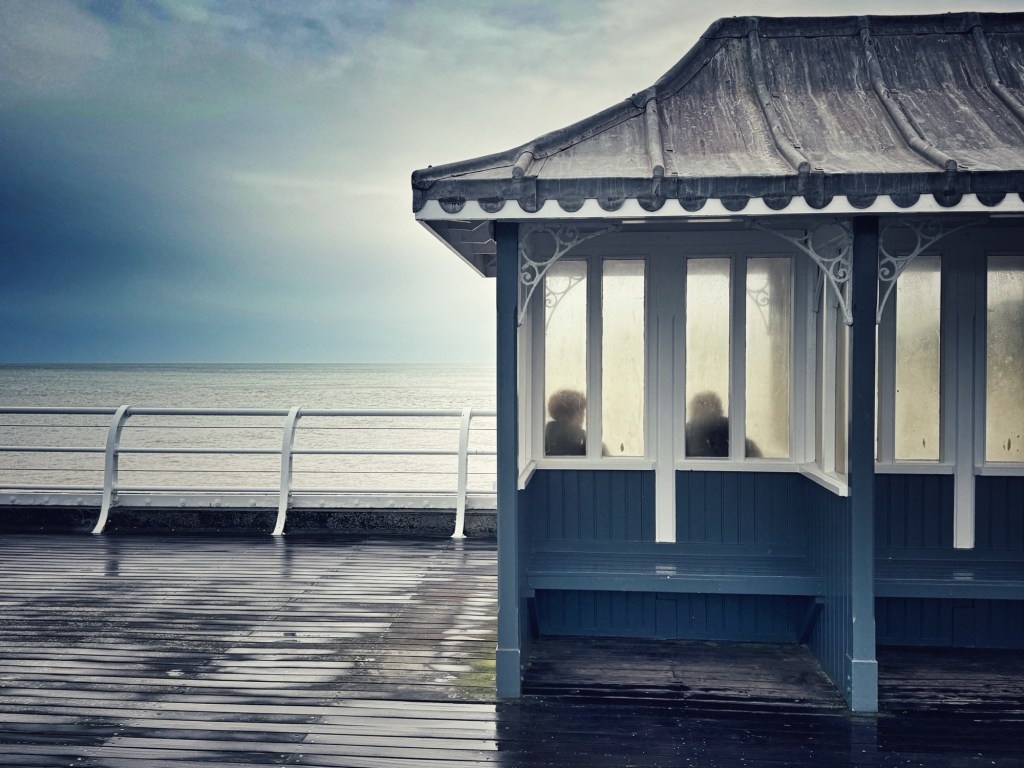
I’m coming to the end of five days in Cromer, staying in a lovely house near the beach, looking after an adorable dog and enjoying some much-needed time to myself. The plan was to get away from everyday pressures, make my own decisions and, hopefully, rest.
And yet, here I am on my last morning, feeling absolutely exhausted and a little disgruntled, which is rather annoying because I’ve had a lovely time!
I’ve walked along the coast, explored Cromer, had a massage, spread myself out like a starfish in a super king-sized bed and returned to my novel, Perfect Imperfect, which I’d been apprehensive about tackling.
So why the disgruntlement?
I suspected five days might not be enough, and I think I was right. Five days is barely enough time to start putting things down, let alone replenish my energy.
I think it was rather convenient to imagine that by stepping away from the demands of my lovely husband, my lovely children and my lovely cats, I’d get a holiday from being needed. And of course they do ask things of me, but I’ve realised that my brain is constantly anticipating demands, whether they’re there or not, looking out for what someone might need, expect or think of me.
I’ve taken myself away from the people I thought were making all those demands, only to discover that the anticipation has come along with me.
Hyper-awareness, not quite hypervigilance
As I was walking this morning, I started thinking about hyper-awareness.
We talk a lot about hypervigilance, which is generally associated with scanning for danger, but what I’ve been noticing in myself is something slightly different. I’m not necessarily scanning for danger, I’m scanning for information.
I’m constantly taking things in, noticing people’s expressions, their tone of voice, their words, the little shifts in their behaviour, what might be happening and how they might react.
And there’s a positive side to this. In my coaching sessions, it’s one of my most useful skills. I notice nuances, make connections and riff with what my clients are telling me, and I can be incredibly present with someone.
But that awareness doesn’t switch itself off when the session ends, and suddenly I realised something that seems rather obvious now I’ve noticed it.
It’s the hyper in my ADHD.
Putting the hyper back in the hyper
Attention Deficit Hyperactivity Disorder.
I’ve always thought ADHD was one of the worst-named conditions. I’m certainly not alone in questioning the terminology, because it’s not a deficit of attention, and I don’t think of it as a disorder either. But the hyper? Oh, there’s definitely hyper!
And that hyper can take so many forms. Hyperattention, hypersensitivity, hyper-distractibility, hyperfocus, hyper-dysregulation, hyper-compassion, hypervigilance… It’s all part of the amplification I’ve been talking about for years, this sense that everything is turned up, that my brain is immensely open in receptor mode.
That openness gives me an enormous capacity to notice, connect and engage, but it also takes a lot of energy, particularly when I’m trying to work out what to do with everything I’m noticing.
One rather ridiculous example of this has been my determination to be the perfect house guest.
My hosts have been incredibly generous and encouraged me to help myself to anything I want, which is exactly what I say when people stay in my home. And I mean it! In fact, I can get a little frustrated when people are too polite to use things.
So I want to take them at their word, but equally I don’t want to take the piss, and I find myself trying to work out where the invisible line is.
Meanwhile, I’ve been planning what to leave as a thank-you. A card, some bread, perhaps a plant, a bottle of wine… and then this morning I seriously considered baking them a cake.
A CAKE!
At which point I had to laugh at myself. Look at me! I’m so special! I’m the most wonderful house guest you’ve ever had!
I can trace some of this straight back to childhood, when I was constantly told how messy and disorganised I was. Apparently, several decades later, I’m still trying to prove to my parents that I can be an excellent house guest, even when they’re not there.
As a child, I was also described as shy, but I wasn’t shy, I was terrified because I didn’t understand the social rule book. Disagreement could lead to shouting or humiliation, so understanding people became incredibly important.
Over the years, I haven’t just learned the rule book, I’ve gone into its footnotes.
And while that’s given me a greater sense of control, there’s a cost to constantly anticipating people’s reactions, particularly when I feel responsible for them.
One of the most useful questions I’ve learned to ask myself is, ‘Is this the hill you want to die on?’ Because before that, everything was a hill.
That question has helped me bring intention back into my attention, to notice something without necessarily having to engage with it.
But I’ve also realised that, despite spending years understanding my ADHD and working with other neurodivergent people, I’m still trying to fix my own brain, trying to get it to settle down, when perhaps it’s simply a very, very busy place.
The necessary myopia of my brain
I’ve been reflecting on why yoga, breathwork and qigong are so useful for me, and I think it’s because they’re opportunities to relinquish the need to be in control through awareness. Someone else guides the hour, and I can simply follow.
I also love closing my eyes, which sounds like a slightly silly thing to say, but it’s one of my main ways of reducing the stimuli coming in. I put earplugs in at night even when I’m alone, and I’ve often described taking off my glasses or contact lenses as the necessary myopia of my brain, a way of telling myself that the world is shutting down for the day.
And interestingly, it’s made me reconsider retreats.
I came here wanting to create my own retreat, rather than following somebody else’s vision of what a retreat should be. I’ve loved having the freedom to make my own decisions, but I’ve also had to make all those decisions.
On an organised retreat, someone else decides what you’re going to eat, where you’re going and what happens next. You just have to turn up, and there’s something enormously restful about surrendering that responsibility.
Perhaps part of having agency is being able to choose when to relinquish control.
It doesn’t mean my brain stops working. On a previous retreat, I found myself photographing tiny details in nature, trees and bark that I’d normally walk past. This week, I’ve been able to return to my novel and spend hours enjoying my own writing.
My attention hasn’t disappeared, it’s simply had the freedom to go somewhere else.
I came here expecting that removing the usual demands would allow my brain to settle, only to discover that it’s still firing on all cylinders. And despite spending years understanding my ADHD, perhaps I’ve been confusing understanding my brain with trying to fix it.
Maybe I don’t need to make my brain less hyper. I need more opportunities to bring intention to my attention, reduce the amount of information coming in and sometimes let somebody else take the lead.
So I think I’ll be looking at booking another retreat, somewhere I can surrender the decisions for a few days.
And perhaps I should make cake one of the conditions. Preferably baked by somebody else.

Leave a Reply