I may have accidentally developed my own little parts model, but in role mode. Let me explain.
I say accidentally because I wasn’t particularly trying to invent one. I spent enough time around coaching, neurodivergence, trauma work and various flavours of therapy to know there are already plenty of excellent models out there. Internal Family Systems, for example, has a rich and sophisticated way of understanding our internal world.
What I noticed, though, was that in coaching sessions I kept reaching for the same three characters:
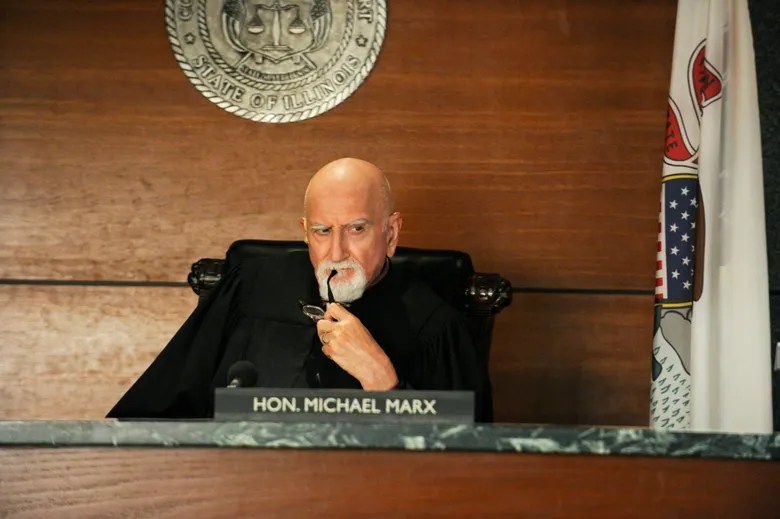
The Judge.
The Adventurer.
And the Anthropologist.
Not because they explain everything, and certainly not because they capture the full complexity of being human, but because they feel immediately recognisable. The moment I mention them, most people seem to know exactly who I’m talking about, even if they’ve never heard me use the terms before.
What fascinates me is that we tend to experience all of this as a single voice. We call it anxiety, indecision, overthinking, procrastination, impulsivity or self-sabotage, depending on which flavour happens to be showing up on a particular day.
The Judge is usually the easiest role to spot, partly because it’s often the loudest. In fact, many of us mistake the Judge for ourselves, assuming that the running commentary in our heads must be objective truth simply because it’s been there for so long.
I’ve always thought the Judge gets a slightly unfair press, particularly in neurodivergent spaces. The Judge isn’t some villain lurking in the shadows waiting to make us feel bad about ourselves. If anything, the Judge has usually been working extraordinarily hard for a very long time.
If you’ve grown up in a world that often felt confusing, inconsistent or oddly difficult to navigate, there’s a good chance you’ve spent years trying to work out rules that everyone else appeared to receive in a welcome pack. What exactly does ‘later’ mean? Why was that acceptable yesterday but not today? How much eye contact is the right amount? Why did that person get away with something that got me into trouble? After a while, the brain starts building its own rulebook, piecing it together from observation, mistakes, misunderstandings, social bruises and the endless effort of trying to make sense of a world that doesn’t always feel particularly logical.
I think that’s where the Judge comes from.
The Judge is where that rulebook gets written and updated. It watches, notices, remembers, connects dots and builds theories about how the world works, all in the service of helping us avoid getting hurt again. The trouble is that the tools available to the Judge aren’t always especially subtle. Shame, guilt, blame, criticism and a truly impressive collection of opinions tend to feature quite heavily in its toolkit.
And underneath all of that, frustrating though it can sometimes be, is care. That’s why I don’t think we should fight the Judge. I think we should thank him. Thank him for spending years trying to keep us safe. Thank him for carrying the burden of worrying about things before we’ve even noticed they might be a problem. Thank him for all the effort you’ve put into building a map of the world from incomplete information. Seriously, we wouldn’t be here without him.
But now it’s time to kindly shut the f**k up, Judge.
Not because he’s wrong or because he’s bad. More because a life organised entirely around safety eventually becomes very small, and however useful survival mode might be in a crisis, very few people want to live there permanently. Safe is also stuck.
Which is usually around the point that the Adventurer starts getting restless.
The Adventurer carries everything that makes life feel expansive. Curiosity, creativity, novelty, stimulation, possibility, wonder, the little spark that makes us wander down an unexpected rabbit hole or ask a question simply because we want to know the answer. It’s the part that spots a side road and wonders where it goes, the part that signs up for the course, starts the project, learns the language, writes the book or decides that perhaps now is the perfect time to investigate beekeeping.
Of course, when the Adventurer snaps, fed up of being told what to do by an overbearing Judge, this is where we fall prey to impulsive and potentially dangerous behaviours. Fuck it, says our brain, I’ll buy this new sooper dooper surround sound system, it makes me feel better, I deserve it, who cares if it goes on the credit card. Right now, not me? Or see also: I’ll eat the whole sleeve of biscuits, it makes me feel better, fuck it… or what’s one more glass of wine, fuck it, I deserve it, it makes me feel better… you get the drift.
The interesting thing is that the Adventurer isn’t the opposite of the Judge. In many ways they’re trying to solve a similar problem. The Judge wants to protect us from pain, while the Adventurer wants to protect us from stagnation. One worries about what might happen if we take the risk, the other worries about what might happen if we never do.
Unsurprisingly, they can find each other deeply frustrating.
From the Judge’s perspective, the Adventurer seems determined to create entirely avoidable complications. From the Adventurer’s perspective, the Judge wants to conduct a full risk assessment every time an interesting possibility appears on the horizon. Left to themselves, these two headbutt constantly, going ‘lalalala not listening at each other’.
Which is the point where I am delighted to introduce to you your new best friend: the Anthropologist.
The reason I love the Anthropologist so much is that it brings something the other two often struggle to access when they’re caught up in their own agendas.
The art of the pause. Not the pause of shutdown or overwhelm, but the pause of curiosity.
If you imagine an anthropologist arriving somewhere completely unfamiliar, they aren’t there to tell people how to build fires. They’re there to watch, listen, learn and understand. They see something that makes no sense through the lens of their own experience and, instead of immediately deciding it’s wrong, they become curious enough to ask why it makes perfect sense in the context where it exists.
‘How interesting.’ says the Anthropologist, stroking his chin affectionately.
‘I wouldn’t have thought of doing it that way.’
‘Help me understand.’
It’s not simply an observer. It’s a compassionate, curious mirror that creates enough space for reflection. It can listen to the Judge without immediately accepting every opinion as fact, and it can listen to the Adventurer without immediately following it into the nearest rabbit hole. Most importantly, it creates enough room for both to be heard, which turns out to be surprisingly difficult when one is scanning for danger and the other is scanning for possibility.
What we’re really aiming for isn’t a victory for the Judge or a victory for the Adventurer. It’s not about deciding which one is right and which one is wrong. What we’re hoping for is that they learn to dance a beautiful tango together.
The Judge brings caution, wisdom and experience. The Adventurer brings energy, curiosity and possibility. The Anthropologist doesn’t take sides so much as create the conditions in which they can finally listen to each other, and when that happens the whole system tends to soften.
The Judge no longer has to carry the impossible burden of protecting us from absolutely everything. The Adventurer no longer has to rebel just to get a bit of breathing space. There is more room for reflection, more room for choice, and perhaps most importantly, more room for a life that feels both safe enough and interesting enough.
I know there are more sophisticated models for understanding our internal world, and I’m not pretending this little trio explains everything. It just feels human. I can remember it when I’m overwhelmed, I can use it in the middle of a difficult conversation, and I can reach for it when my brain is trying to convince me that either everything is terrible or that buying a campervan is the only reasonable response to a stressful week.
What I like about this little trio is that nobody has to win. The Judge, the Adventurer and the Anthropologist all have something valuable to contribute.
The trick is making sure they all get a voice and don’t ignore each other.


Leave a Reply