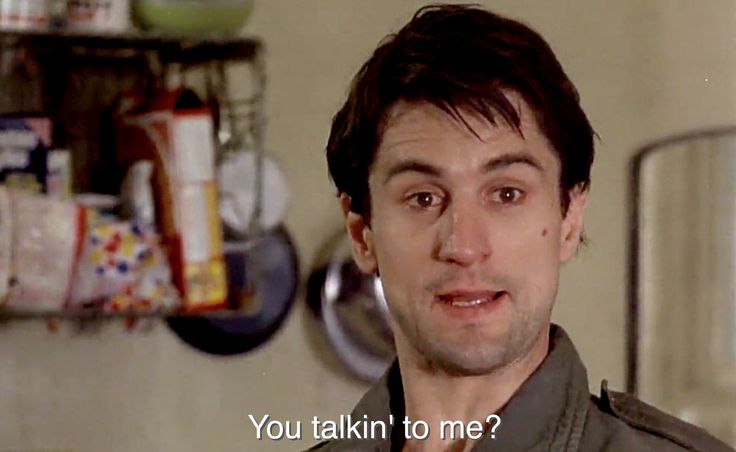
Small talk is the bane of many a neurodivergent life. In fact, if I had to choose one of the quickest ways of identifying a fellow neurodivergent person in the wild, it would probably be the look that crosses their face when they realise they’re about to spend twenty minutes discussing weather systems, school gates, office kitchens, parking regulations or whether they have any nice plans for the weekend.
The funny thing is that most of us can do small talk perfectly well. We’ve learned the script, we know the expected responses, we’ve developed entire conversational toolkits around commenting on the temperature, asking polite questions and making reassuring noises at appropriate intervals. The issue isn’t capability. The issue is that for many of us, small talk feels a bit like being asked to survive on garnish when what we were hoping for was an actual meal.
I don’t think that’s because neurodivergent people dislike people. If anything, most of the neurodivergent people I know are endlessly fascinated by humans. Give us somebody’s weird hobby, their life story, their latest obsession, the thing they’re secretly trying to figure out about themselves, and many of us will happily stay engaged for hours. What we struggle with is the curious ritual of talking without really saying anything, particularly when authenticity is one of the values we tend to hold so tightly.
The more I’ve thought about it, the more I’ve come to the conclusion that small talk isn’t really about exchanging information anyway. Nobody genuinely needs an update on whether it’s been a bit warm recently. We all have access to the same sky. What small talk seems to do is create safety. It’s a way of approaching another human being without immediately stepping into vulnerability, disagreement, emotion or uncertainty. It’s social reconnaissance, a gentle checking of the terrain before deciding whether it’s safe to venture any further.
Once I started looking at it that way, I found myself becoming much less irritated by it. Not because I suddenly developed a burning passion for discussing cloud formations, but because I could see the function it was serving. The weather is safe. Traffic is safe. Somebody’s new haircut is generally safe. A detailed discussion about your childhood attachment wounds is perhaps not where most people want to begin.
Where things become more interesting is when we look at what happens afterwards.
Because in my experience, the small talk itself is often not the exhausting bit. The exhausting bit is what many of us do once the conversation has ended. We replay it, analyse it, pull it apart, examine it from seventeen different angles and start trying to work out whether we got it right. Did I talk too much? Did I not talk enough? Was I awkward? Did I seem rude? Did they think I was weird? Did I miss something? Was that facial expression significant? Should I have asked another question?
Meanwhile the other person is probably making a cup of tea and thinking about literally anything else.
Which is where I think small talk stops being about conversation and starts being about self-worth.
For many neurodivergent people, every interaction carries a tiny hidden question underneath it: was I acceptable? Did I pass? Did they like me? And because that question is rarely conscious, we can end up spending enormous amounts of energy trying to solve a problem that may not even exist.
What struck me in the discussion that led to this article was that we often assume our job is to become better at small talk, when perhaps a more useful question is whether we are giving it far more importance than it deserves.
Our attention is precious.
Our curiosity is precious.
Our energy is precious.
Those things are not infinite resources, and yet many of us spend them as though we are running some kind of public service where everybody is entitled to unlimited access. Not every interaction deserves that level of investment. Not every conversation needs to become meaningful. Not everybody has earned the full director’s cut version of you.
This is also where I think it’s helpful to remember that we don’t actually have to stay.
I know that sounds obvious, but I don’t think it is.
Many neurodivergent people seem to operate as though entering a conversation creates a binding legal agreement from which there is no escape until one party dies, moves country or is called away by a major emergency. In reality, we’re allowed to leave. We’re allowed to go to the loo. We’re allowed to get another drink. We’re allowed to notice somebody we need to talk to. We’re allowed to say, ‘It’s been lovely chatting, I’m just going to…’ and wander off into the distance.
None of this is rude. It’s simply recognising that social energy is finite.
The other tool I love is what I think of as reverse staircase wit. The French have a phrase, esprit d’escalier, which describes that moment when you’ve left the conversation, you’re halfway up the stairs with a baguette under your arm, and suddenly your brain produces the perfect response that would have been incredibly useful ten minutes earlier.
The reverse version is deciding not to wait until afterwards.
If you know you’re walking into a situation that tends to follow a predictable script, whether that’s a networking event, a school gate, a family gathering or an office Christmas party, there’s absolutely no reason not to prepare. You’re allowed to have answers ready. You’re allowed to know what you’re going to say when somebody asks what you’ve been up to lately. You’re allowed to have a few questions in your back pocket. You’re allowed to prepare exit lines. You’re allowed to make life easier for yourself.
The anthropologist in me rather likes this approach because it shifts the focus away from performance and back towards observation. Instead of wondering whether people like us, we can become curious about them. Are they interesting? Are they kind? Do they ask questions back? Do they seem safe? Do I actually want to spend more time talking to this person?
Those are very different questions.
And perhaps that’s the thing I keep coming back to with small talk. The goal isn’t necessarily to become brilliant at it. The goal isn’t to transform yourself into somebody who can happily spend three hours discussing wheelie-bin collection schedules without breaking eye contact.
The goal is to stop treating every passing interaction as a referendum on your worth as a human being.
Sometimes it’s the beginning of a meaningful connection.
Sometimes it’s just two people discussing the weather.
And sometimes it’s perfectly okay to smile warmly, deploy one of your carefully prepared reverse staircase responses, and preserve a little of that precious energy for the conversations that actually feed you.


Leave a comment