On non-perceived time, sensory autonomy and the luxury of choosing what we allow.
I’ve always been a terrible sleeper. The famed night owl.
For much of my life, the hours between going to bed and falling asleep could be spent in genuine terror. Terror of what tomorrow might bring, of the future, or of the past and how it might come back to affect the future.
But those same hours could also feel like stolen moments of peace and pleasure.
What has redefined my relationship with sleep more than anything else has been a fairly recent discovery: going to bed doesn’t have to mean going to sleep.
It’s something I explore in my Sleep 101 guide, which I’m currently creating as a self-led course to be published…. Ooooh, soon?
And I’m still very much a baby when it comes to sleep epiphanies.
It started with something I began calling non-perceived time.
Through observation, I realised that I need about two hours between going to bed and actually being ready to sleep. Two hours for my nervous system to settle, to let go of the day, to reach a place where I feel able to surrender to sleep.
And rather than seeing those two hours as a problem, I’ve started recognising them as something I need.
I’ve been playing with this idea for a few months, and it’s felt really satisfying.
For me, non-perceived time is that moment when I can effectively say: ‘I’m no longer available to the world.’
Of course, I can’t control what the world might demand of me. The demands don’t necessarily stop just because I’ve gone to bed.
But I can give myself permission to no longer be available to them.
I think that’s an important distinction. It’s not simply about no longer being needed, but about letting go of the perception of being needed. That constant feeling that my mind must remain open to incoming demands, ready to respond, ready to process whatever might come my way.
Going to bed allows me to close that door.
And there’s something interesting about why bedtime makes that possible.
Nighttime is one of the few moments when society actually gives us permission to be unavailable.
There’s a generally accepted social code that when people go to bed, they’re no longer available. Unless there’s a major emergency, we don’t expect them to respond.
For once, what I need and what the world expects of me seem to align.
But there’s a catch.
Society gives us permission to be unavailable at night because we’re supposed to be sleeping.
And that’s where our old friend, productivitis, comes in.
We spend our days under pressure to be productive, to respond, to do what is expected of us. Then, when we finally reach the one part of the day where we might be free of that pressure, we find ourselves under another obligation.
To sleep.
And preferably to do it properly.
So when we decide that actually, no, we’re not going to be pressured anymore, we’re going to give ourselves some time, but we don’t go to sleep, we immediately reintroduce guilt, shame and blame.
We’re not doing what we’re supposed to be doing.
Even when we’re trying to reclaim our time, we can end up judging ourselves for how we spend it.
And that’s why the reframe has been so important for me.
When I go to bed, it’s not necessarily to go to sleep. It’s to give myself a window of no pressure.
A window where my agency, my choice, my autonomy and my needs come first.
I think this is often something we instinctively try to do, but we either ignore that instinct or don’t feel entitled to give ourselves what we’re asking for.
And now I’ve had another epiphany.
Because I’ve been thinking about what I actually do during those two hours of non-perceived time.
And I do quite a lot.
I often spend time on my phone, playing games, looking things up, sometimes even doing some online shopping. All things that any good sleep hygiene guide would frown upon as terrible, terrible things to do before going to sleep.
But when I notice myself doing something, I’ve increasingly learnt to move away from asking ‘What a terrible thing to do!’ towards asking ‘Why am I doing it?’
What am I getting from it?
And I realised that there’s another important dimension to my non-perceived time.
It’s not just about removing myself from external demands.
It’s about choosing what I allow back in.
For those two hours, I have an extraordinary amount of autonomy over my sensory environment.
I can decide how much light I want. Whether the window is open. Whether I want the fan on. Whether the pillows are fluffed enough or need flipping.
I can decide what I want to smell.
Perhaps Weleda’s arnica massage oil, with its rosemary and lavender scent, which I find incredibly seductive. Or The Body Shop’s grapefruit body butter, an absolute feast for my nose.
I can decide what I want to feel.
Massaging cream into my fingers and hands, massaging my jaw or my face. The touch of the fabric, the bedding, the T-shirt I might be wearing. Or the feeling of having no underwear or trousers on, that delicious feeling of nakedness.
I might decide to have a bath or a shower, because the feeling of being in water and weightless and held can be incredibly soothing.
In the summer, I might choose to go to bed with wet hair to keep cool. Or I might have a shower simply to enjoy the sensation of the drops of water falling onto my skin, in a way that feels deeply satisfying, almost hypnotic.
And sound.
Do I want to listen to music? Do I want some yoga nidra? Do I want to watch or listen to a video?
Or do I want silence?
I often want silence, and I really enjoy it.
I also love putting my earplugs in well before I’m ready to sleep. There’s something about dulling the world around me that feels wonderful.
And the thing is, none of these choices comes with any pressure.
I don’t have to do any of them.
I get to decide what I want, when I want it, and how much of it I want.
Just saying that gives me an almost physical thrill of pleasure.
And I think there’s a name for what I’m describing: sensory autonomy.
The ability to have some control over the sensory input we receive.
It isn’t necessarily about removing all stimulation. After all, I might choose to look at my phone, listen to music or enjoy a particular smell or sensation.
It’s about having the luxury of deciding which stimuli I invite in.
And that feels like an important addition to my understanding of non-perceived time.
Because it’s not just that, for a while, I no longer have to be perceived by the world.
I also no longer have to perceive everything the world wants to put in front of me.
My brain is constantly processing, constantly open to additional stimulus, constantly ready for something else to demand its attention.
But when I go into my non-perceived bubble, I can begin to reduce that incoming stimulation, particularly the stimulation I haven’t chosen.
And then I get to orchestrate what remains.
There’s something incredibly resourcing about that.
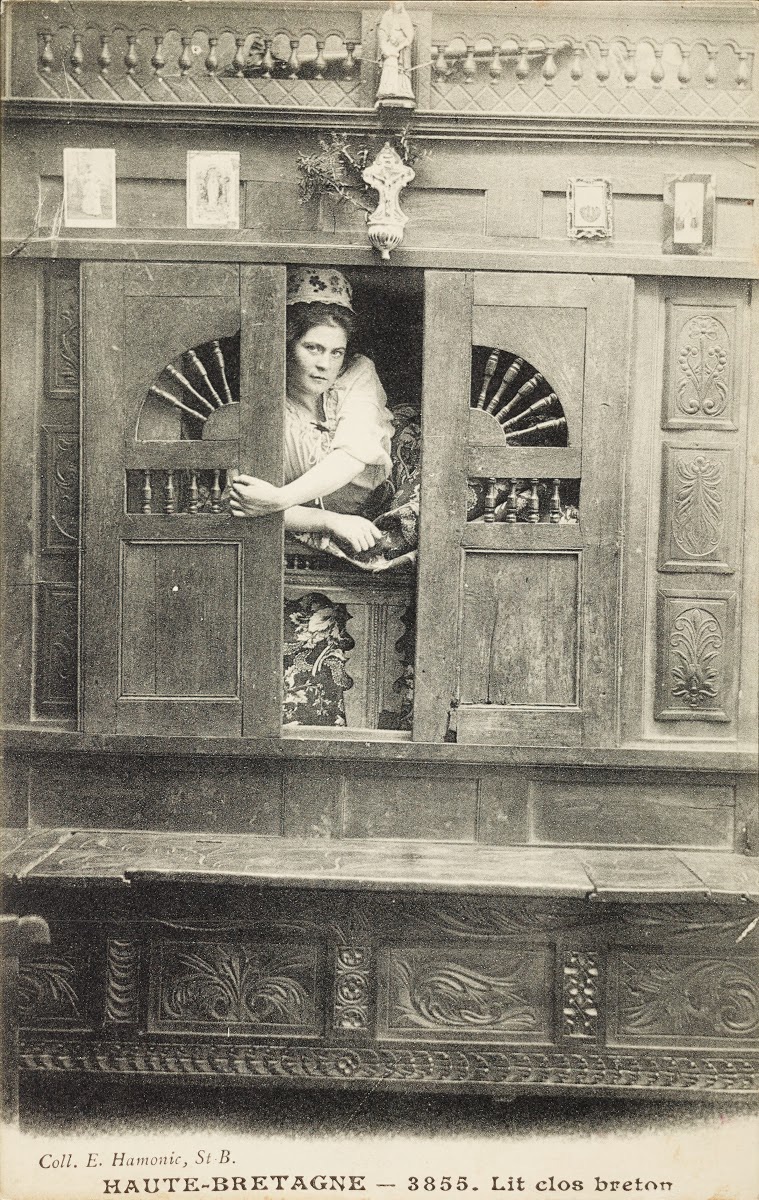
When I was younger, I remember reading about the lit breton, essentially a bed inside a cupboard. And I absolutely dreamed of having one.
The idea of being in this secure, enclosed space, almost like an immersion chamber where nothing else could come in, was just wonderful to me.
Looking back, I think that longing was already telling me something about what I needed.
A space where I could shut out the world, feel secure, and decide what I wanted to let in.
And I realise that, in a way, I’ve created my own lit breton, in sensory terms.
Not through walls or doors, but by choosing what reaches me. The sounds, the light, the textures, the smells, the sensations.
I’ve created a space where I can feel held, protected from unwanted demands, while still being able to enjoy whatever I choose to invite in.
And perhaps that’s why this time feels so delicious to me.
It makes me wonder whether some of the time we spend awake at bedtime, time we might otherwise judge as wasted or unproductive, is actually meeting a need that we struggle to meet during the day.
A need for agency. For choice. For autonomy.
For the chance to put our own needs first without having to negotiate, justify or explain them.
Of course, we need sleep. I’m not suggesting that spending hours awake is always good for us, or that sleep deprivation doesn’t matter.
But I do wonder whether, in our determination to get sleep right, we sometimes overlook what we’re trying to give ourselves before we can let go.
Perhaps there’s a reason we’re reluctant to surrender those precious hours.
And perhaps, rather than immediately trying to eliminate them, we could get curious about what they give us.
For me, the first discovery was that going to bed doesn’t have to mean going to sleep.
The second was recognising that I need time when I can give myself permission to be unavailable to the world.
And now, the third is understanding that this time also gives me the freedom to decide what I want to invite into my world.
I think that’s why being awake in bed can feel so restorative.
And perhaps the biggest change is that I’ve learnt to make time for bedtime.
Because now that I understand what those two hours give me, I can be more intentional about when they start.
Rather than waiting until I’m exhausted, going to bed and then feeling guilty because I’m not falling asleep, I can actually choose to give myself that time.
These days, I often choose less TV time and more bedtime.
And that’s because bedtime has become an absolute joy to me.
It’s something I look forward to. A time when I can finally say that my needs, my choices, my autonomy come first.
And it leaves me wondering something else.
If bedtime is one of the few moments when we feel able to reclaim that autonomy, how might we begin to make more room for it during the rest of our day?
Perhaps that’s where we can start making bedtime ours again.
Not by introducing another set of rules about what we should or shouldn’t do, but by understanding what we actually need from that time.
And giving ourselves permission to have it.

Leave a Reply