Just one, but the light bulb really needs to want to change.
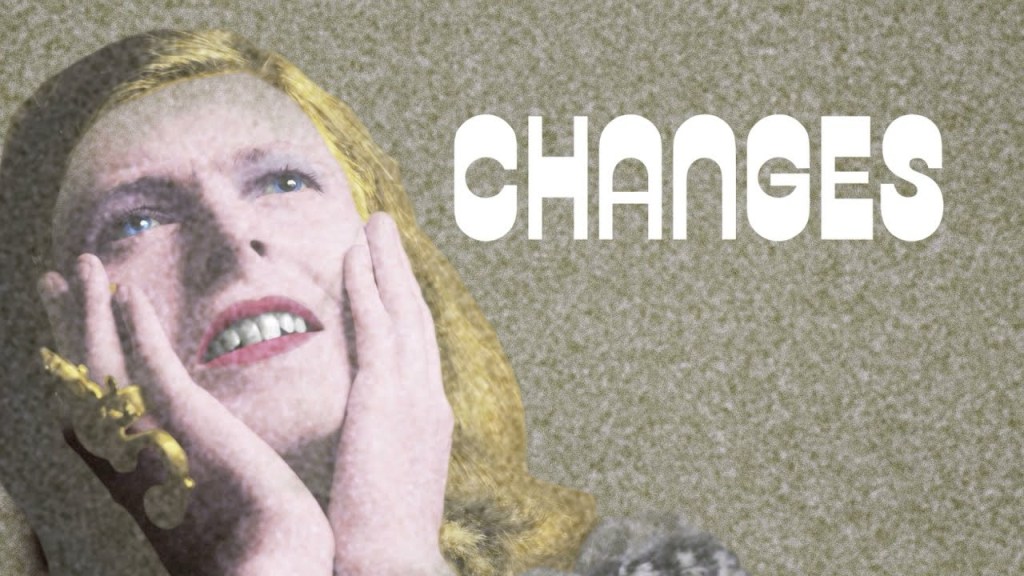
“If you feel safe in the area you’re working in, you’re not working in the right area. Always go a little further into the water than you feel you’re capable of being in. Go a little bit out of your depth. And when you don’t feel that your feet are quite touching the bottom, you’re just about in the right place to do something exciting.” — David Bowie
This lightbulb moment is my favourite joke. But it’s also at the heart of so much of why we struggle as humans.
And isn’t it interesting how often we’re waiting for somebody else to change?
If he did this, if she did that, if only they would do things differently, then everything would be okay.
Because, of course, it’s much easier if the light bulb decides to change all by itself!
But the reality is that the only person we have the power to change is ourselves.
And what’s interesting is that sometimes, when we start making changes ourselves, it can set off a whole chain of change. By doing things differently, we can show that change is possible, that it can be safe, and sometimes others will follow suit.
But that means we’re the ones who have to take that first step.
And that’s where things get uncomfortable.
There are some very contradictory ideas out there. One of them is this code in our society which says that, in order for everything to be okay, whatever it is, we just need to find the thing that works for us, and then keep doing that. Repeat.
It’s a very seductive idea, but also a really inaccurate view of how we work.
For that, I’d like to go straight back to our biology.
Our bodies are made up of cells that divide and change over time. We are constantly renewing ourselves. In fact, research estimates that around 330 billion cells are replaced in the human body every single day. 330 billion!
There’s a myth that our entire body renews itself every seven years, which isn’t quite true. Some cells stay with us for most of our lives, while others are replaced very quickly. But the point remains that our bodies are constantly changing.
And then there’s neuroplasticity, the brain’s ability to change and reorganise its connections in response to learning and experience.
We are constantly evolving beings. That’s what life is. It’s change.
So the idea that we should find one formula and then not change any more seems to go against the very nature of being alive.
Why are we expecting ourselves not to move, not to change, not to evolve?
It doesn’t make any sense.
The one time we stop evolving is when we’re dead, and even then there’s decomposition going on. We’re still in movement. So even that isn’t entirely valid!
So why are we so resistant to something that is so natural to us?
Drum roll.
No surprise here. It’s going to be the same answer that we find in practically everything when we start digging, and not even that deeply.
It doesn’t feel safe. It doesn’t feel secure. It doesn’t feel supported.
Change is scary (back to Bowie…Changes and Scary Monsters and Super Creeps… he definitely was onto something).
Change is doing something that isn’t comfortable. Change is wondering what the risk might be.
And what is becoming more and more clear to me is that, despite having more material comforts than we’ve ever had, the one thing that often remains uncomfortable is our nervous system.
And its impact is huge.
Here’s an example.
I love singing.
If I allow my eight-year-old dreamy self to come through for a second, she’ll tell you that what she really wants is to be a singer. That’s the dream.
Singing feels amazing. Expansive, emotive, soothing, expressive. It’s an incredible thing.
But through a number of experiences, I learned that singing was unsafe. Partly because I didn’t know how to, and partly because there were some nasty comments along the way.
And to be completely open, I am tuneful. I can carry a tune. I’m not a belter, I’m not a natural, perfect singer. But I don’t have an unpleasant voice.
Yet there were enough of these things thrown my way for me to become very uncomfortable with singing.
Remind me to tell you someday about trying to join a course called ‘Singing with Confidence’, and how the prospective teacher described my singing as ‘mediocre at best’, adding that they had plenty of those already.
Let’s remember that this was a course supposed to be about learning to sing with confidence.
This guy was in the wrong job.
Anyway, for the past five years I’ve been working with a singing teacher, Katina, who brings a lot of humour, a lot of technique, and a lot of removing fear.
Because that’s a huge part of the job she does.
And something quite amazing has happened over that time.
There was a whole upper register of my voice which I really struggled to get through. I would strain, almost strangle the notes trying to get them out, and often couldn’t.
And that register has just come back to me.
The truth is that it’s not just the skill and the technique that have made a difference. What’s made a difference is moving my nervous system away from that state of fear and getting to a place where I’m okay.
And then the notes come out.
It’s a perfect example of how much our nervous system influences what we can do.
And that’s why change is scary.
Because we have to do something when we don’t know the outcome. We don’t know how it might be judged. We don’t know how we might judge ourselves. We might not know the very real dangers we could encounter.
And I don’t think much of this is conscious.
We start building up an understanding, through everything we experience in life, that trying things can be edgy. So change becomes a potential source of stress, anxiety and worry.
And here comes the hermit crab.
There’s quite a zoo going on in my head, and the hermit crab is one of my favourite inhabitants. I’ve been using it as an example for years.
Think about what a hermit crab does.
It grows inside a shell that’s very protective. But then the shell gets too small, and it needs to leave it to find a bigger one. Without doing that, it risks stunting its growth, and even putting its life in danger.
Familiar much?
The problem is that there’s no guarantee that the bigger shell will be available or suitable.
And even if the coast is clear, I can imagine that the moment of going from one shell to another must feel incredibly dangerous and vulnerable.
I’m not a biologist, by the way, so I’m sure someone will correct me on the finer points of hermit crab life.
But without that move, we don’t get to the bigger shell. We don’t get to keep growing. We don’t get to put bigger paintings on bigger walls.
Change is necessary.
Without it, we risk becoming stunted.
And this is something so central to the work that I do.
When people come to me, they say, ‘I’m stuck. I don’t know what to do. I’ve tried everything.’
And the reality is that very often, underneath that stuckness, there’s something that sounds like this:
‘I don’t want to take another step because every time I’ve tried before, I’ve been hurt. So I need to not go anywhere, because if I go somewhere, I’ll be hurt again.’
The brain has learned that.
Sometimes even an invitation to consider something differently can feel threatening. Because taking in new information might mean reconsidering what we thought we knew. And that might mean having to change.
It’s not necessarily that we’re incapable of changing, or even that we don’t want to. It’s that the possibility of change itself can feel unsafe.
And so a big part of the job is to re-engage with the fact that vulnerability does feel edgy, that discomfort is scary, and yet that taking a step can also be the way we give ourselves space to make the rest of our world safer.
If we never take a step out, even a toe out, we’re not going to know what it’s like.
There are approaches in therapy, including CBT, that talk about exposure and habituation. The idea that through repeated experiences, something can become less frightening.
And there’s validity in that.
But I think what is sometimes missing from the conversation is the nervous system.
It’s not simply a cognitive process. It’s not just about making a decision, thinking differently or knowing that something is safe.
Our nervous system has learned from everything that has happened to us. And those lessons influence what feels possible, even when consciously we might want something very different.
And here’s the thing. In order to change, we have to allow ourselves to be vulnerable. And vulnerability feels edgy. It feels uncomfortable. It can feel downright scary.
And that’s understandable. That’s very human.
But vulnerability is not weakness. I would argue that vulnerability is one of the biggest forms of courage. That’s a subject for another article, beautifully informed by the work of Brené Brown.
Which brings me back to Bowie.
I’ve always loved his observation about going just a little out of our depth, to the point where our feet are no longer quite touching the bottom.
In fact, I toyed for a while with starting a Twitter feed called ‘Bowie Wisdom a Day’. Because, of course, Bowie is God.
And I think there’s something in that image of being just beyond what’s comfortable. Allowing ourselves to feel vulnerable without necessarily throwing ourselves into danger.
Because change isn’t a ‘nice to have’. It’s not a ‘wouldn’t it be nice if…’
Change is absolutely essential. It’s part of being alive.
And if we want to grow, to experience something more expansive, we have to allow ourselves to step beyond the shell that has kept us safe, even when doing so feels vulnerable.
The question, then, isn’t simply how we get ourselves to change. It’s how we make that process feel safer.
And isn’t it interesting that we talk about having a ‘light bulb moment’ when things suddenly fall into place?
So, are you ready for yours?
Because if you haven’t changed your light bulb in a while, the likelihood is that it’s getting dimmer, or it risks imploding at any moment…

Leave a Reply